Nestor PeñaDesign Engineer · Product Designer

Case study 03 · My own product · Design and build1 min readIn beta since November 2026

The orishas, in their colours and in their dance.

A phone-first library of the Cuban orishas: who they are and how they dance.
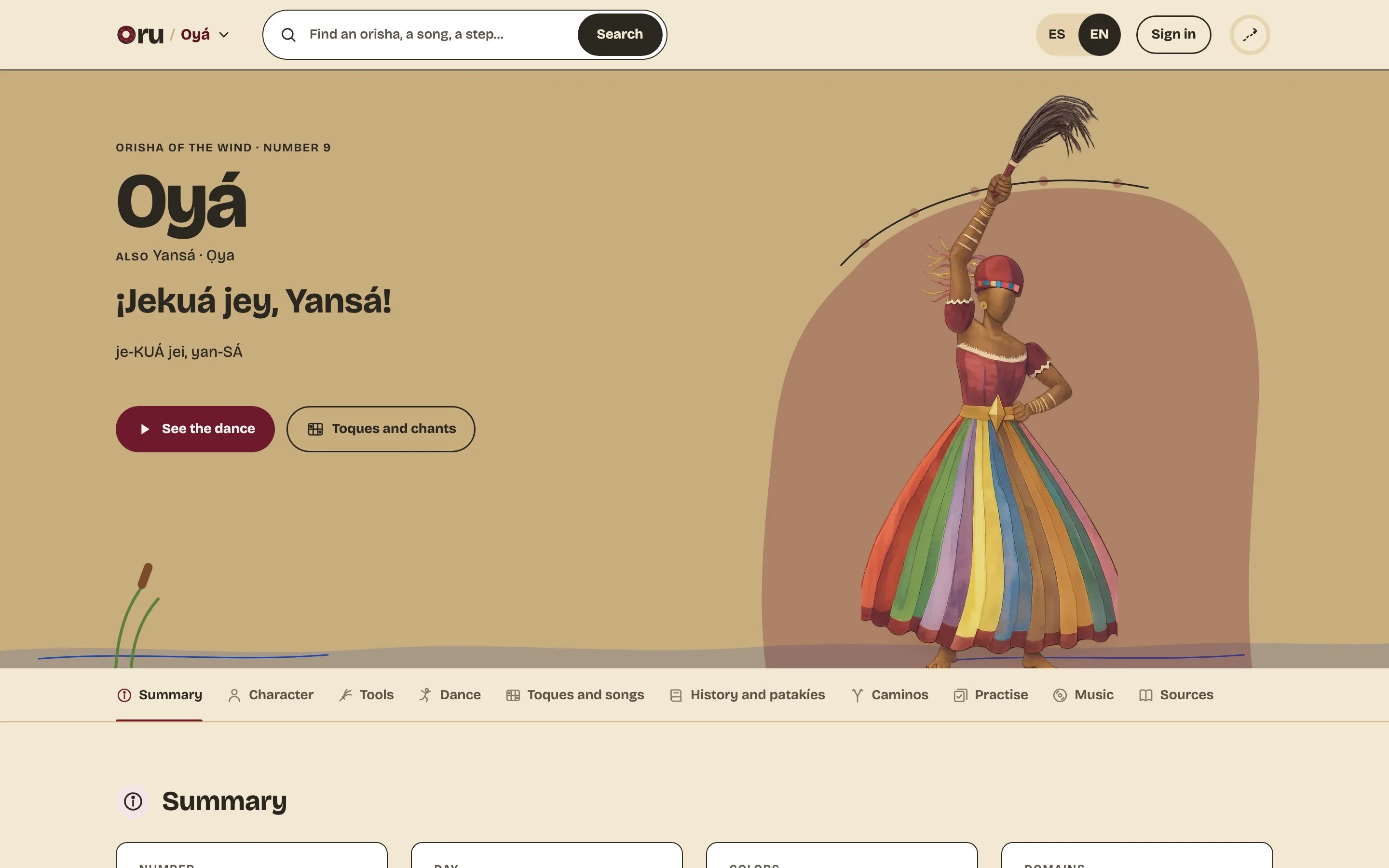
Oyá’s page on desktop: her name and greeting on the left, the painted figure in a rainbow skirt raising the iruke on the right, then the sections bar
Built with
  • Claude Code
  • AI agents
  • Python
  • gpt-image
  • Astro
  • TypeScript
  • Stripe
  • Cloudflare Workers
  • Cloudflare D1
8orishas
94dance lessons
560painted illustrations
489cited sources
View mode

Showing the result. Switch on the Thinking layer to see how I got there.Showing margin notes, sketches and the options I rejected.

Context and role

no central authority, many copies

Dancers learn the orishas from scattered videos and copied blogs.

My own product, from research to payments. I dance and teach Cuban salsa; the orisha dances are part of that training, but the knowledge is spread across old books, house traditions and uncredited posts.

  • TruthThe religion has no central authority. Practice varies by house, and sources disagree.
  • RespectNo consecrated objects drawn, no faces invented, the religion never charged for.
  • PhonesAbout 70% of dancers read on a phone, often in the studio.
  • DeadlineLaunch at two dance festivals in May 2027, in Spanish and English.

How I thought about it

one body, many paintings

Art direction

One look from a mood board
A stock illustration kit

Five directions, from Cuban art

Each direction drew the same Ochún page, its icons and its figures, so I compared whole systems, not swatches.

Illustration

Hand-drawn SVG figures
Commission 600 drawings

3D rig, painted over

One body for all eight orishas, poses I can correct, and a painted look dancers took seriously.

Animation

Bounce the whole figure
Keyframe by hand

The rig moves the painting

The painting moves the way the dance moves, and stays a 1 MB video.

Sources

Pick one version
Write it without citations

A source on every claim

When sources disagree, Oru shows every version side by side.

Payments

Stripe Billing, VAT myself
A reseller platform

Stripe Managed Payments

Stripe is the merchant of record, so a sole proprietor can sell a subscription worldwide.
What I built

Five art directions

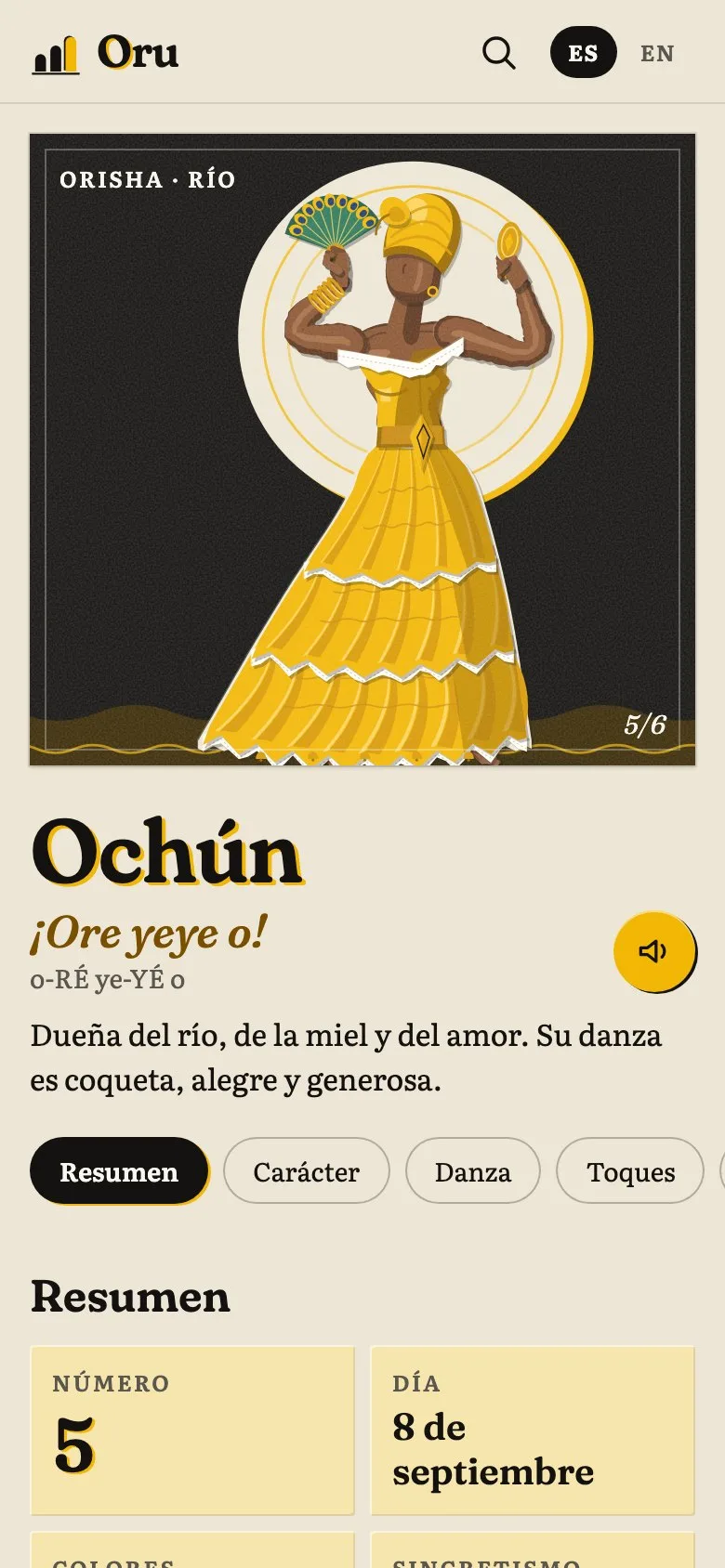
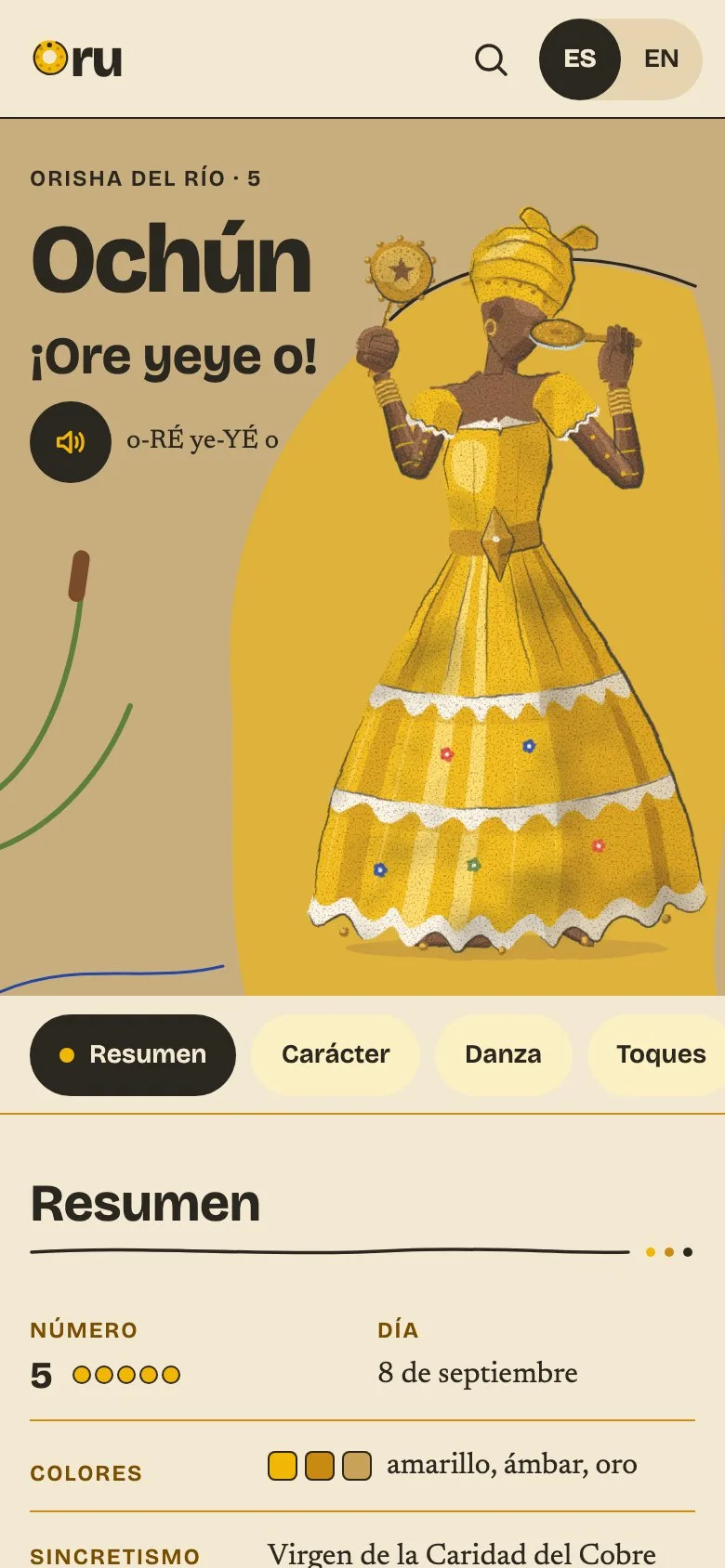
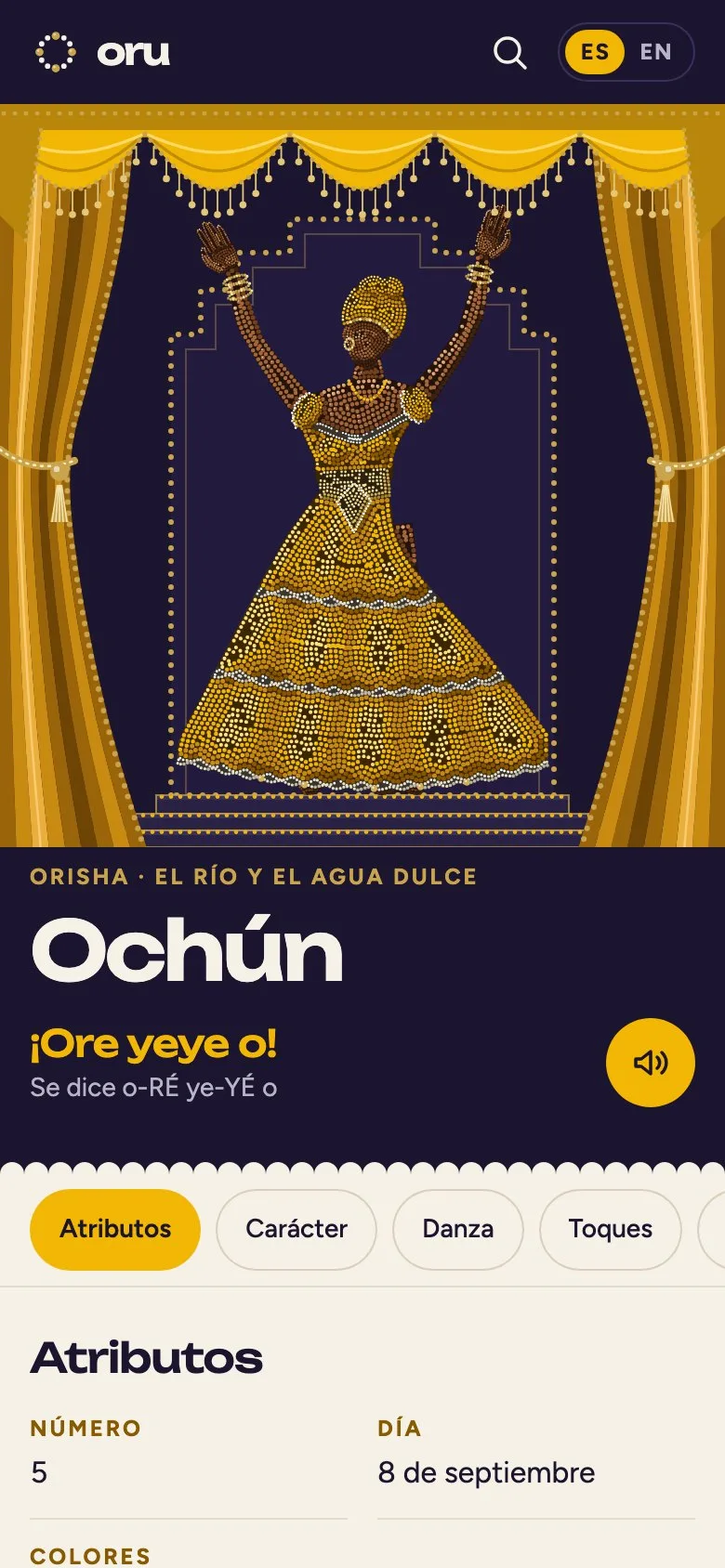
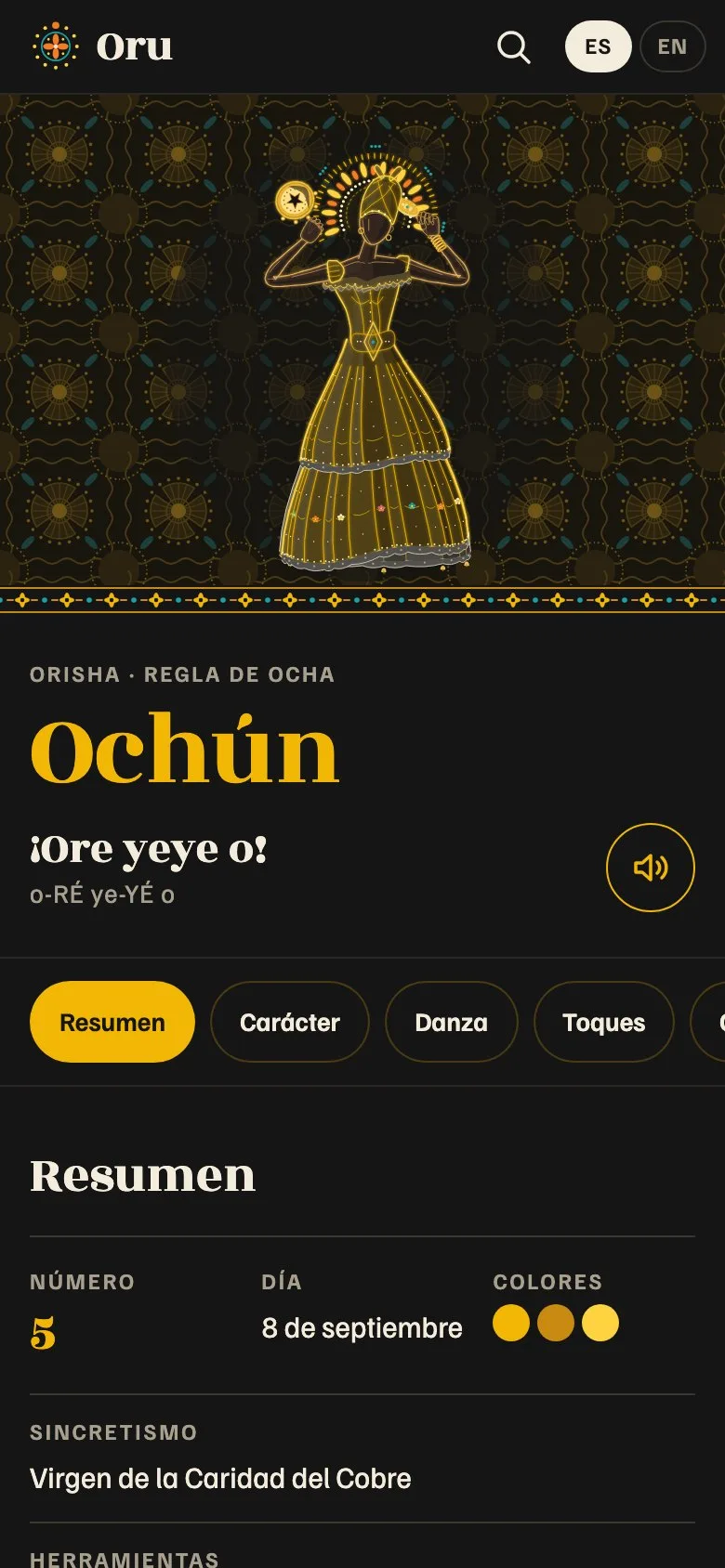
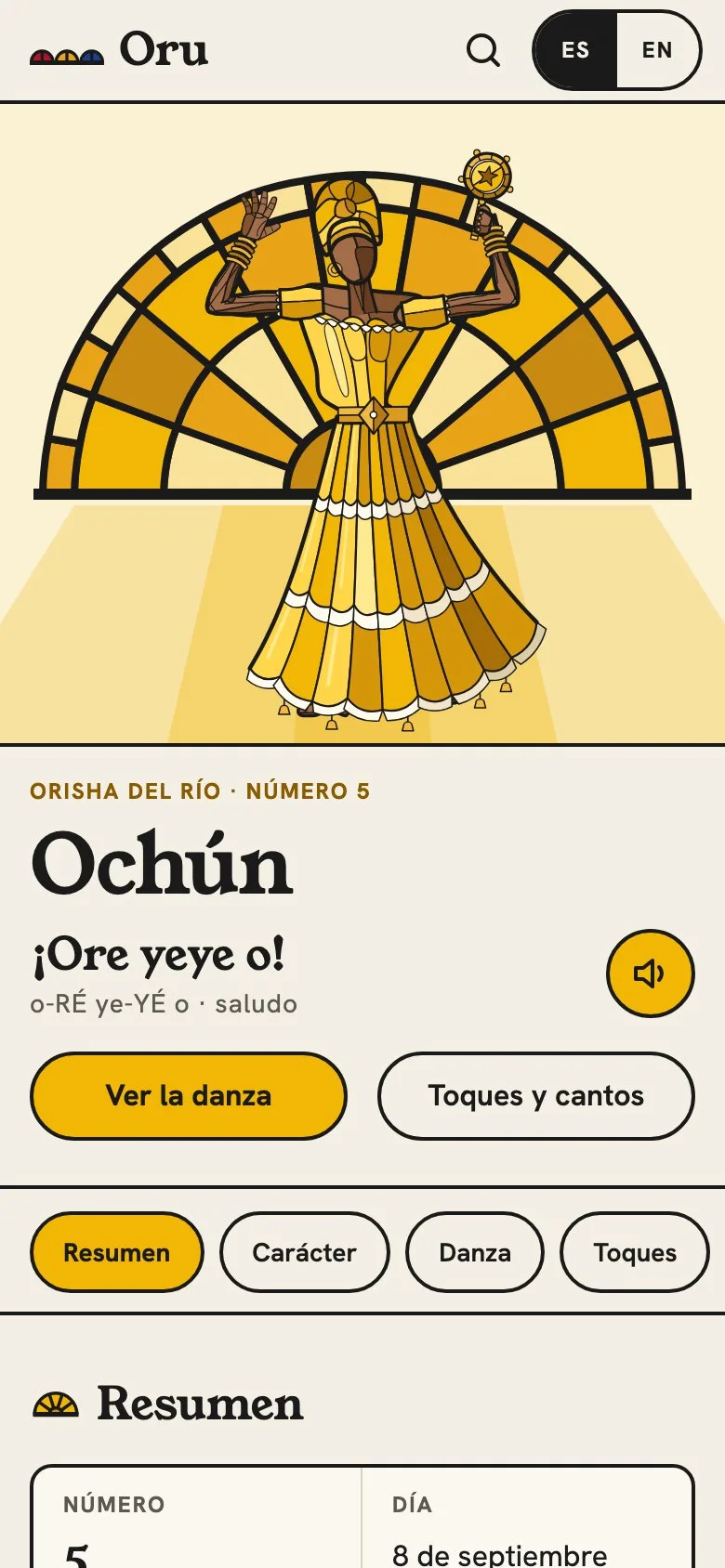
Direction A, Mediopunto: Ochún inside a stained-glass half-moon window
A · Mediopunto
Direction B, Colografía: Ochún as a relief print on a dark card
B · Colografía
Direction C, Monte y Agua: Ochún painted on a kraft wash with a river line and cane
C · Monte y Agua · final
Direction D, Cuentas: Ochún in beadwork on a theatre stage
D · Cuentas
Direction E, Flora: a gold line Ochún on a dark tiled pattern
E · Flora

Final: C, Monte y Agua, with the best of A, B and D.

Each direction came from a Cuban source: stained-glass mediopuntos and Amelia Peláez, relief prints, Wifredo Lam and Mendive, beadwork, Portocarrero. I chose Monte y Agua and borrowed the best of the others: A’s quick actions, B’s grain, D’s clear sections.
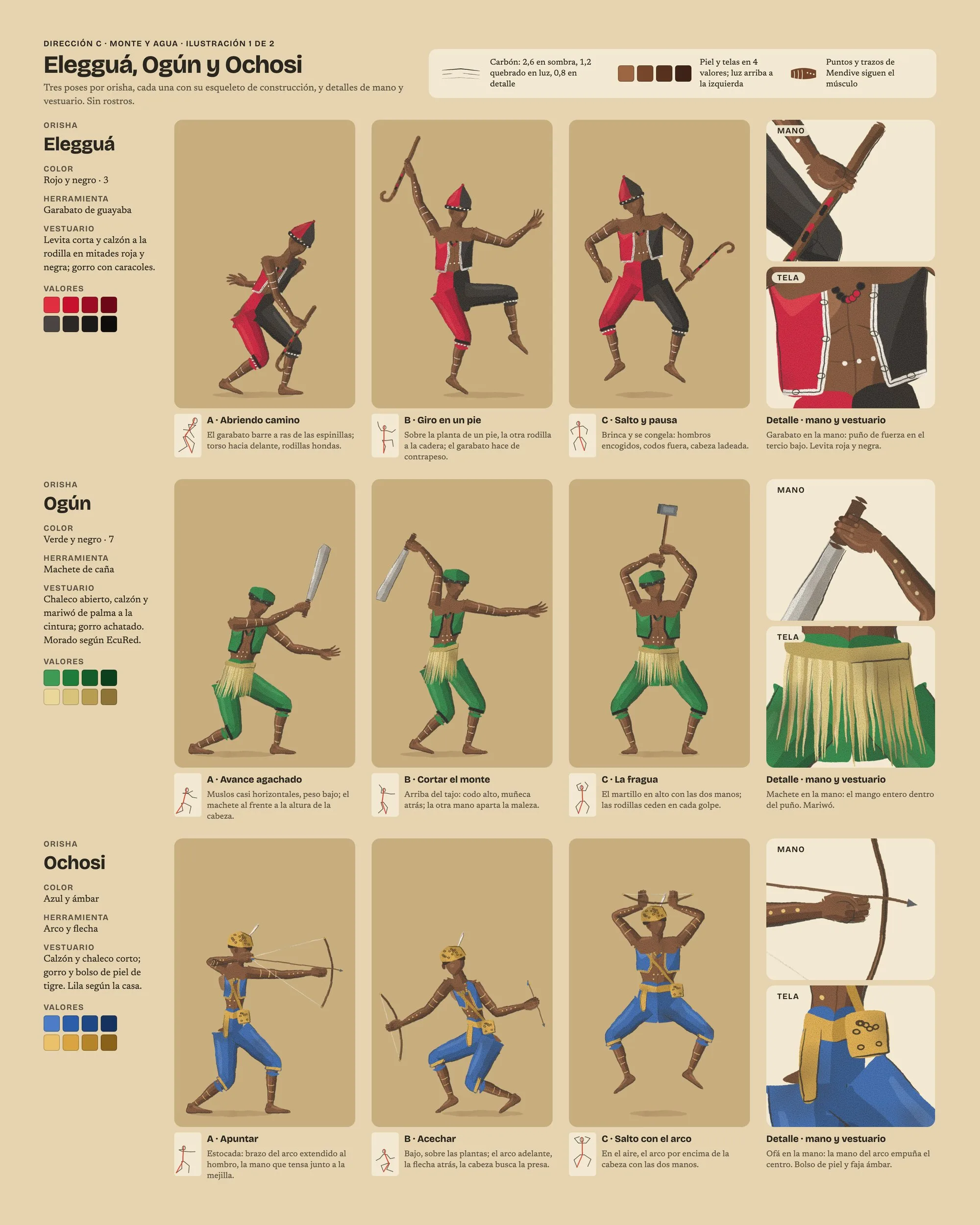
Monte y Agua illustration board: three poses each for Elegguá, Ogún and Ochosi, with their skeletons, colour values and hand and costume details

An icon for every tool

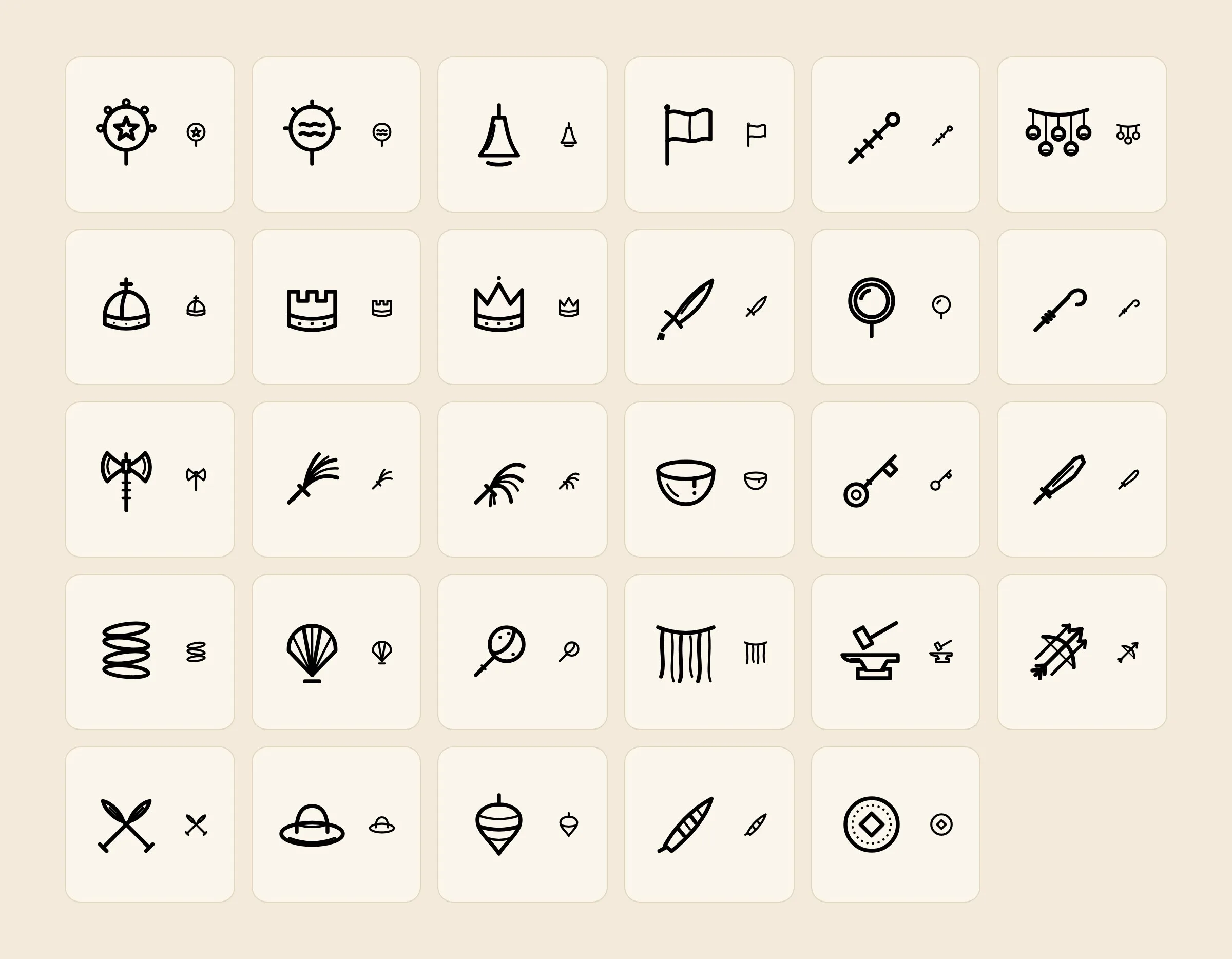
29 tool icons in one line style, each at 48 px and 24 px: fans, axes, machete, bow and arrows, crowns, iruke, oars, keys and more

The icons follow the figures: rounded ends, one stroke weight, drawn on a 24 px grid and redrawn by hand at 48 px, never scaled up. Each icon is named after the object, never the orisha, and consecrated objects are left out.
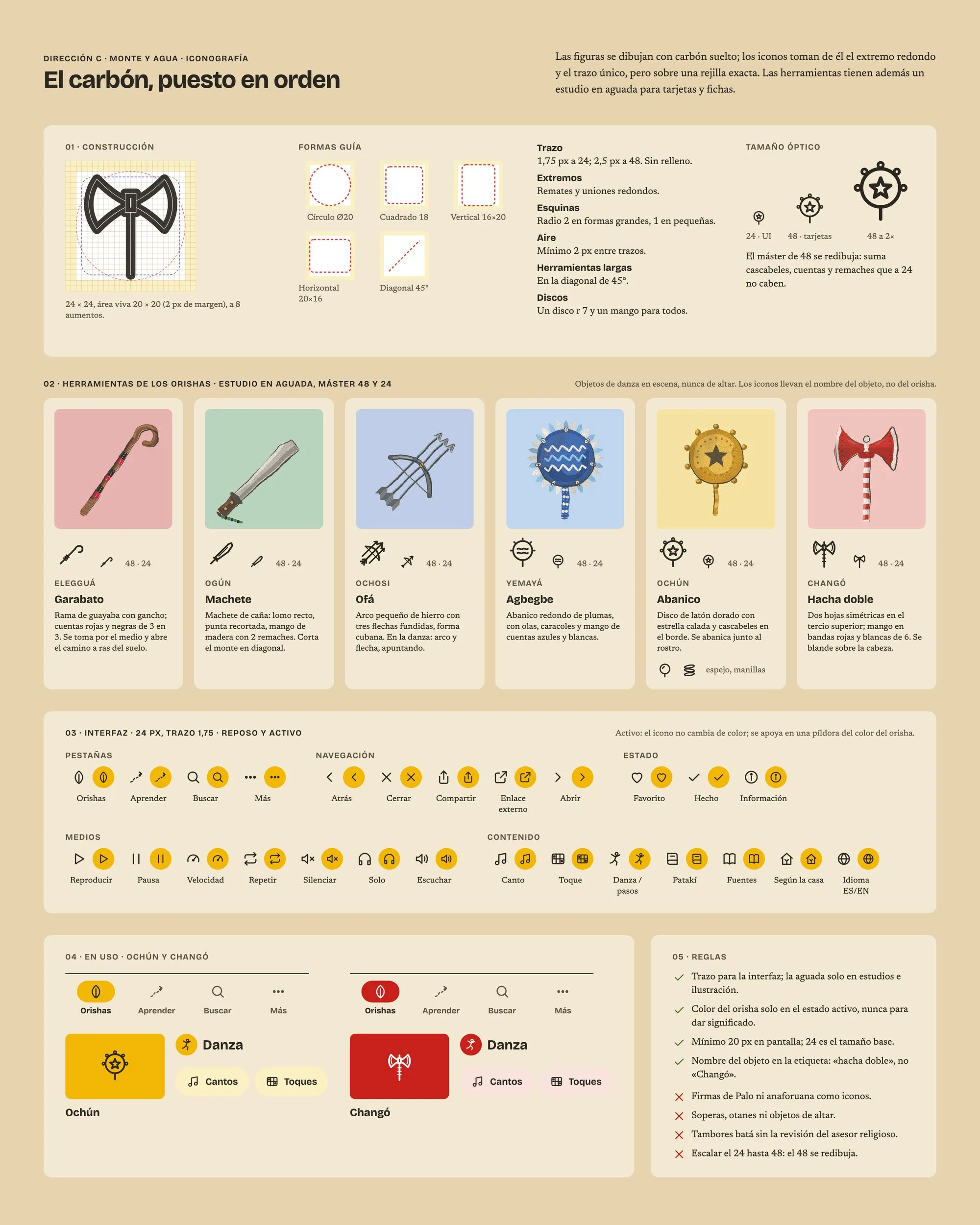
The Monte y Agua iconography board: construction grid, the orisha tools as icons and wash studies, the interface icon set at rest and active, and the rules

Living heroes

  • One painting, the rig’s motion. Each hero is a single painted still, bent frame by frame by the joints of the 3D rig that drew it.
  • Two formats. WebM with transparency for Chrome, HEVC for Safari; the still shows first and stays if the video can’t play.
  • Reduced motion. With reduced motion on, only the still shows.

From rig to painting

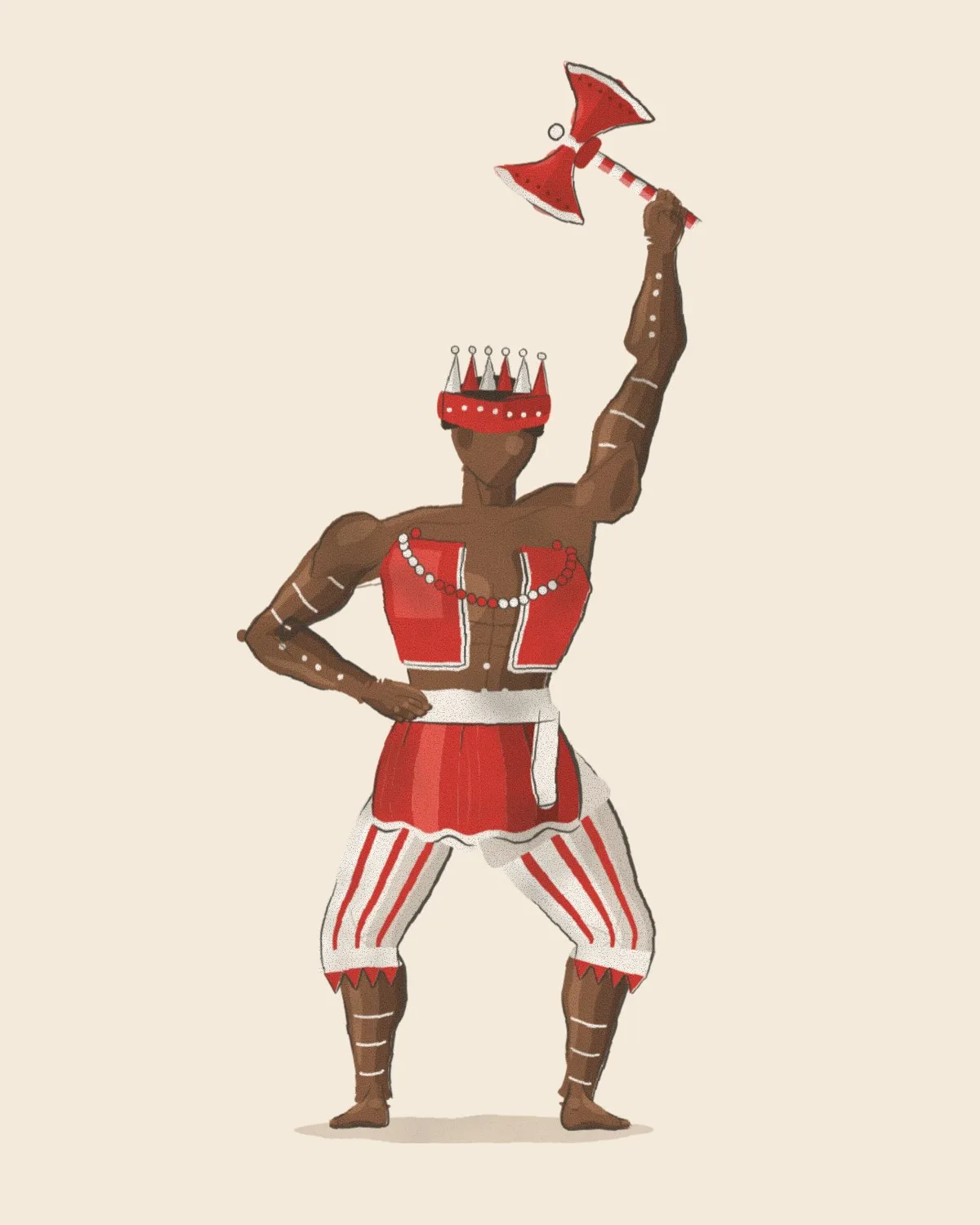
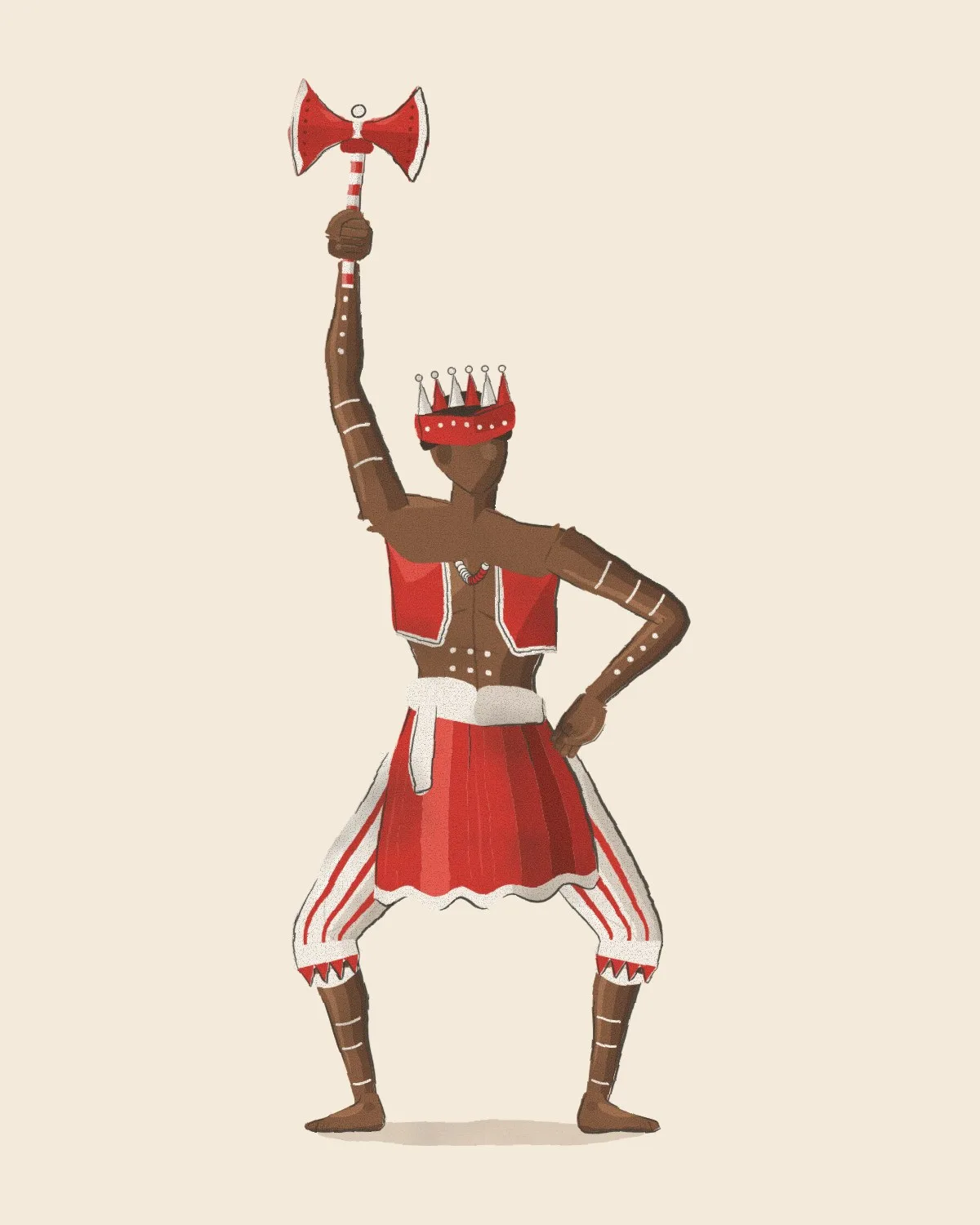
Day one: Changó drawn as a flat SVG figure
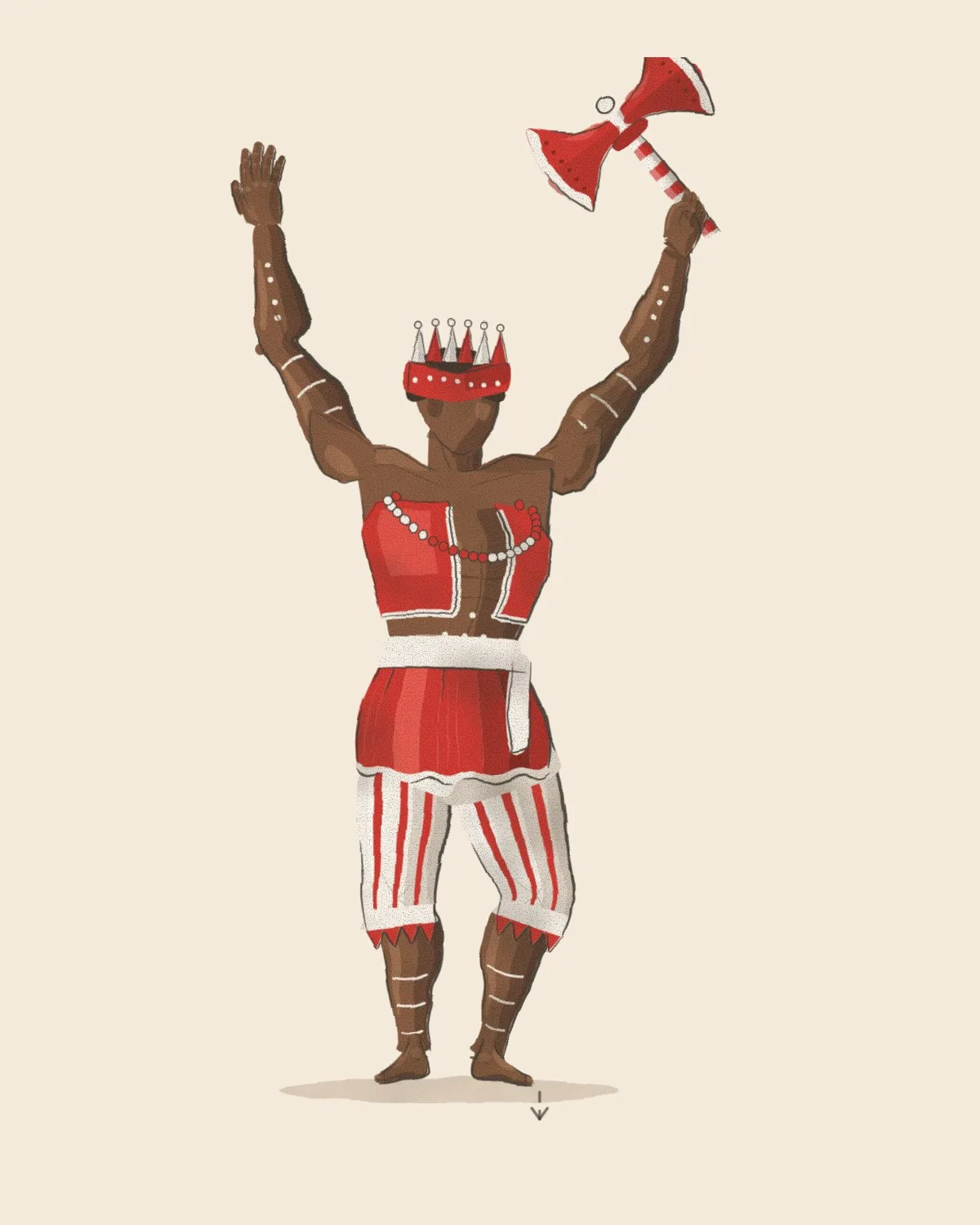
Day two: the same pose drawn from a 3D rig
The pose corrected against reference photos and videos
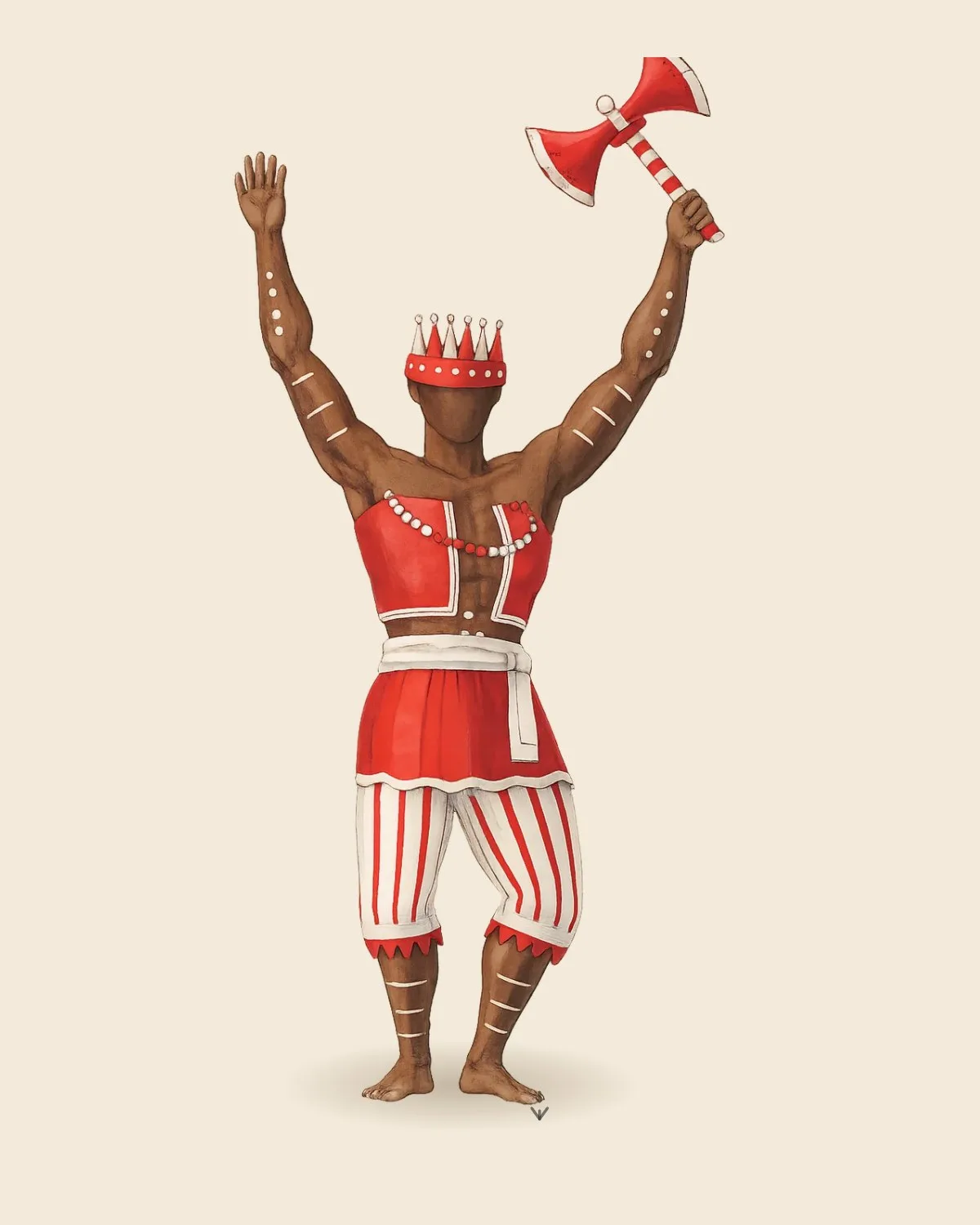
The final painted figure in the same pose
  • A Python rig. One body for every orisha; each pose is joint angles, so a correction is one line.
  • Poses before paint. Every one of 322 steps was checked against a reference book, photos of real dancers and videos before a single paid repaint.
  • A painted pass with guard rails. An image model repaints each rig drawing; my script re-aligns the silhouette, checks the joints and locks the costume colours.
  • Cost. About 560 images for roughly 130 dollars, cached so a fix repaints only what changed.

Lessons, step by step

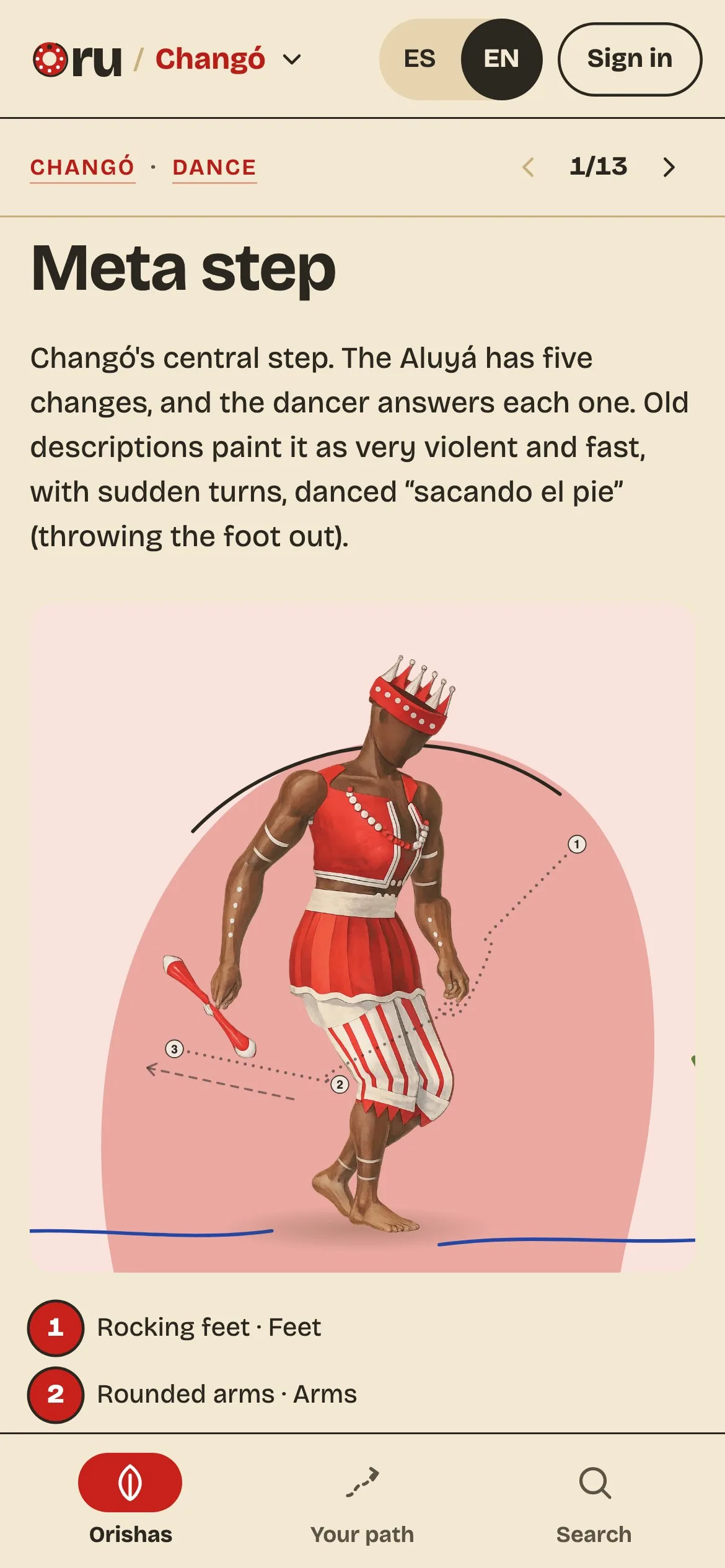
Changó’s Meta step lesson: the description and the annotated figure with motion arrows
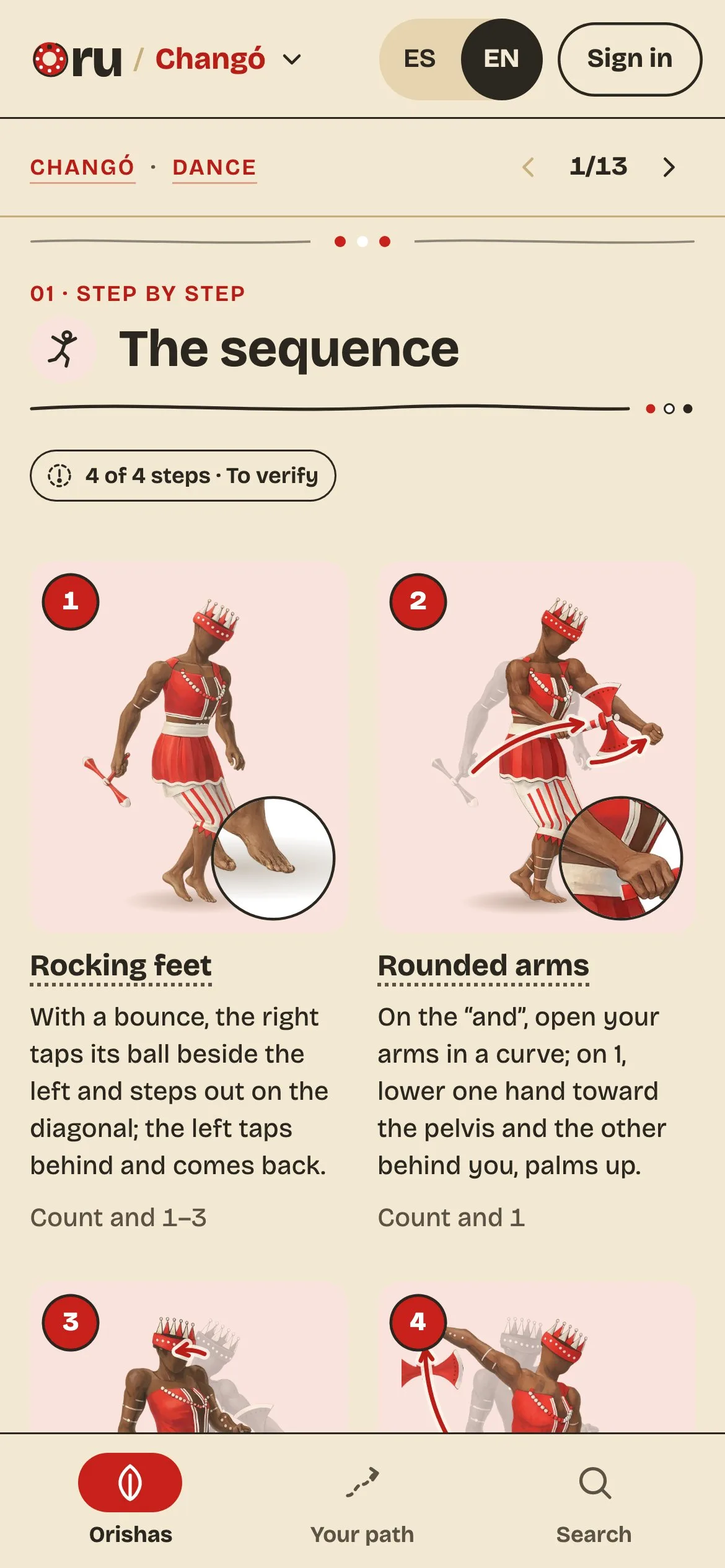
The sequence: four numbered step drawings, each with a close-up of the foot or hand that matters and the count
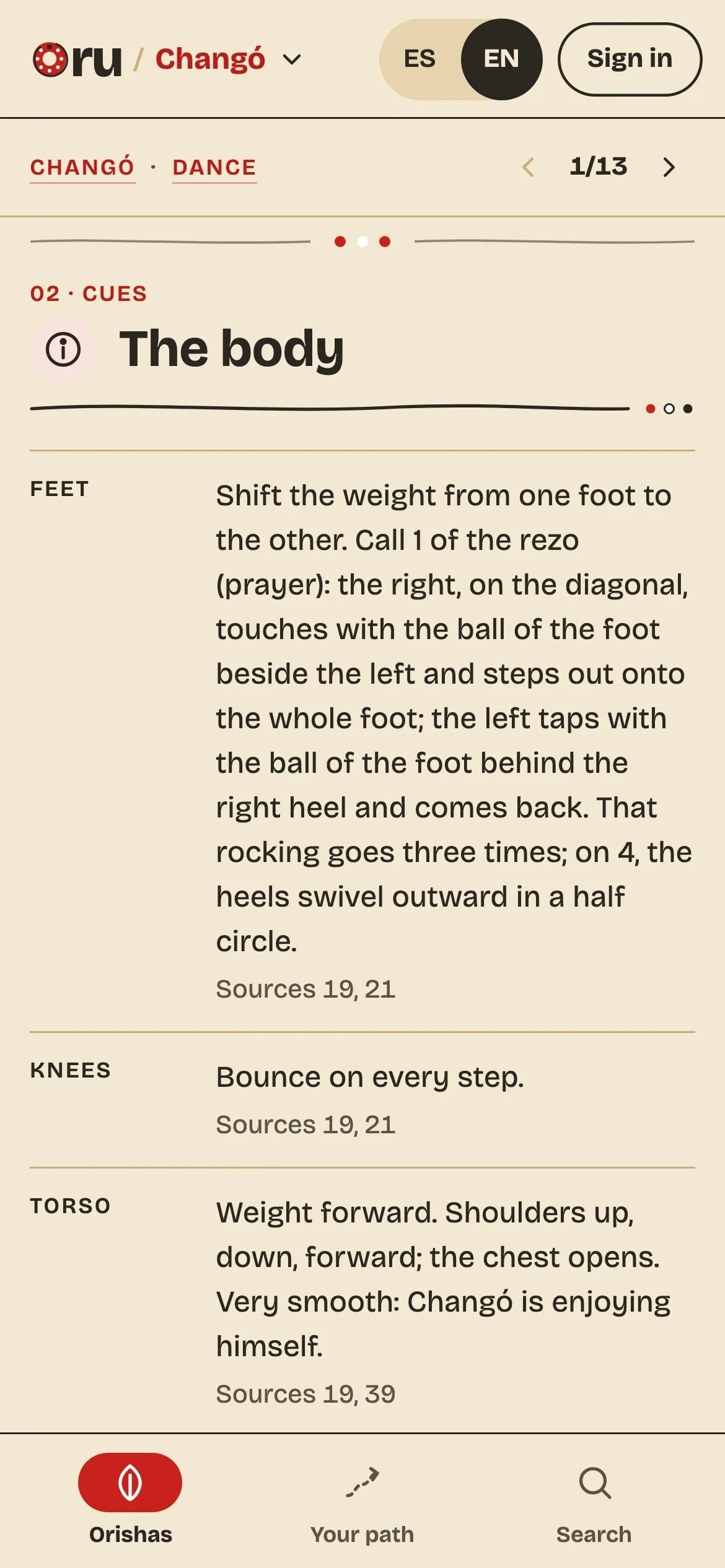
The body: cues for feet, knees and torso, each with its sources

Toque, canto and step

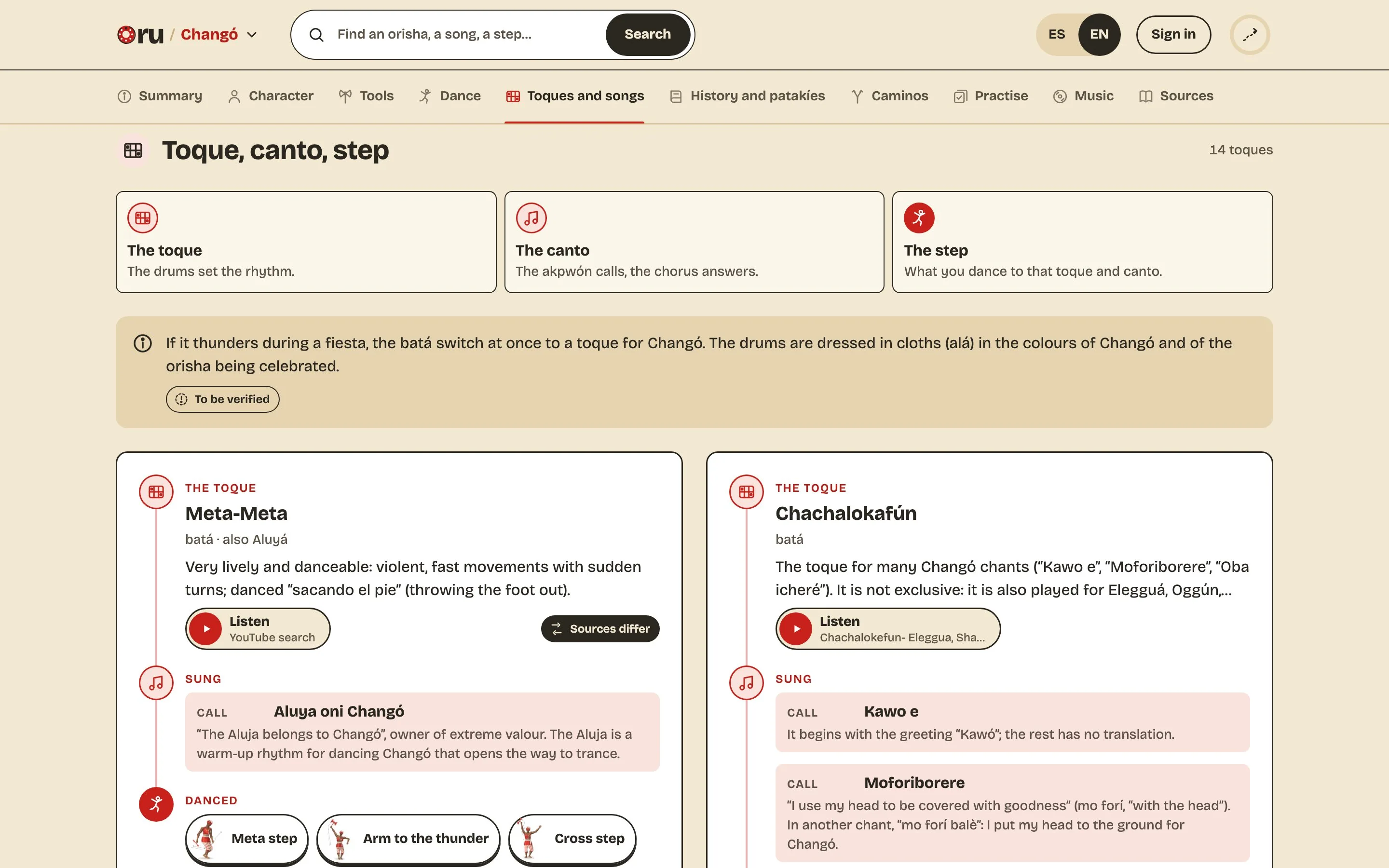
Changó’s Toque, canto, step section on desktop: each toque card lists the cantos sung over it and the moves danced to it

A source on every claim

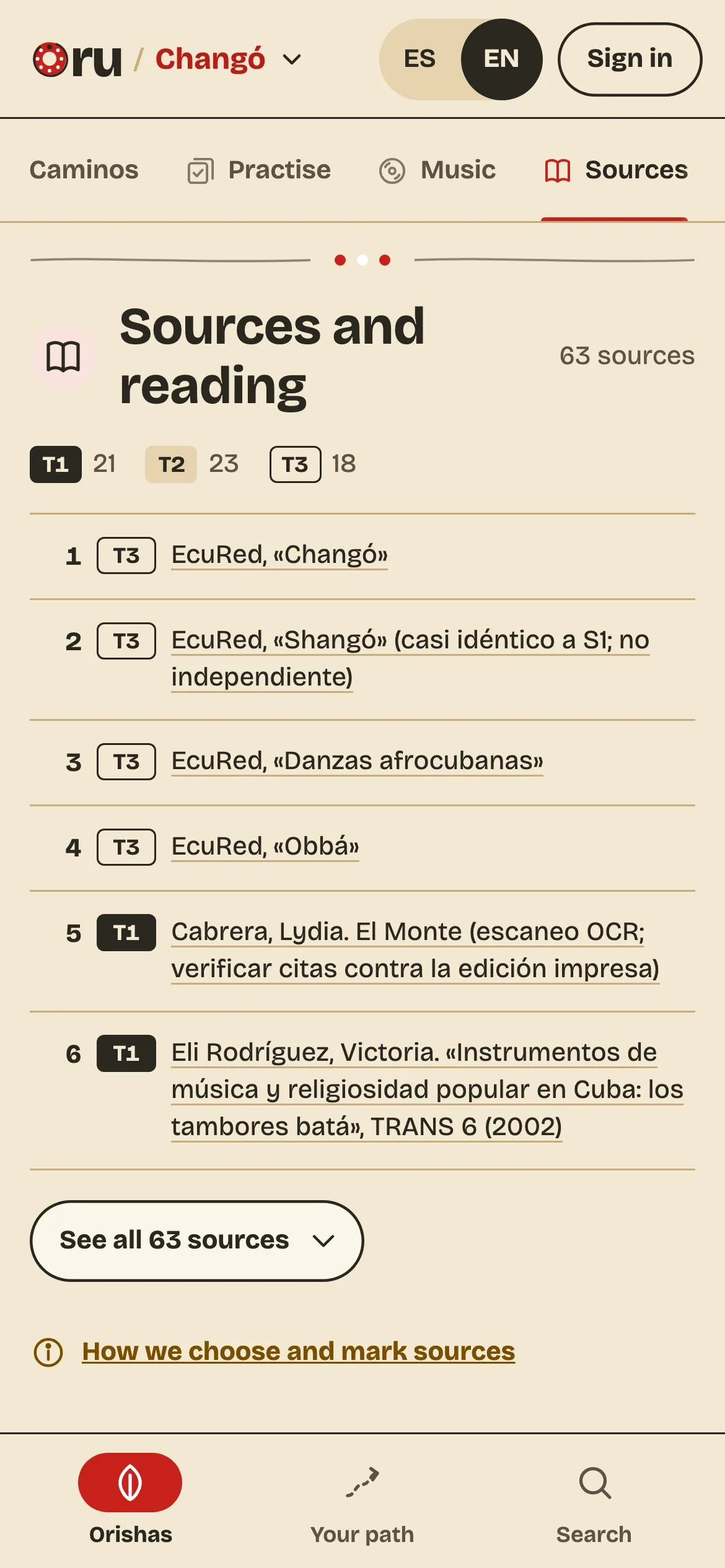
Changó’s sources: 63 numbered sources with T1, T2 and T3 tiers
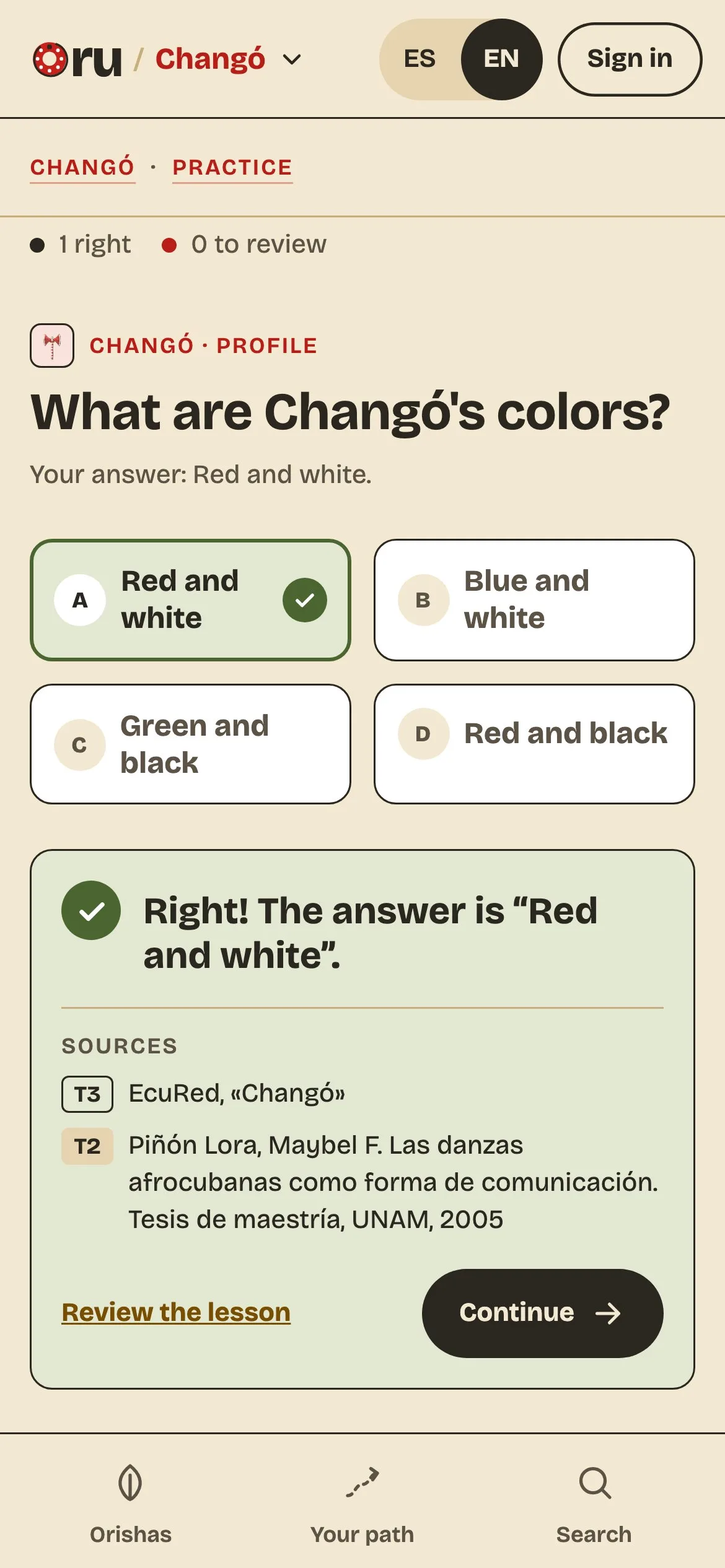
A practice question answered right, with the two sources behind the answer and their tiers
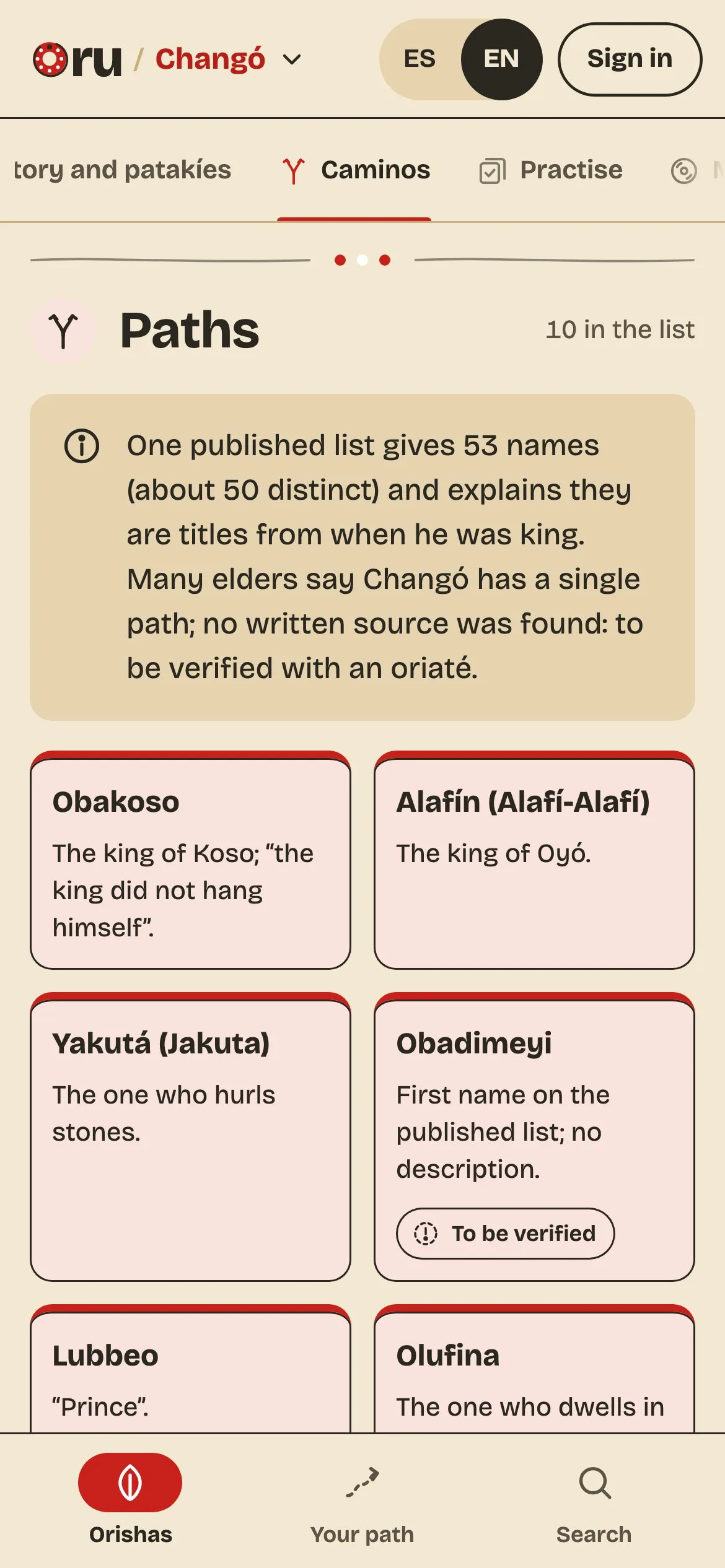
Changó’s paths, with a note on how sources disagree and a To be verified mark
  • Agents in parallel. One research agent per orisha filled gaps and checked every “to be verified” claim online, from one shared brief.
  • Four reviewers. Separate agents audited all 322 dance steps against the reference book and the videos; I settled every disagreement.
  • My own library. Agents indexed my books on Afro-Cuban religion and music into 28 cited research notes.
  • Three tiers, four marks. Consensus, varies by house, sources differ, to be verified: the label is always visible.

Oru Pro, music and a shop

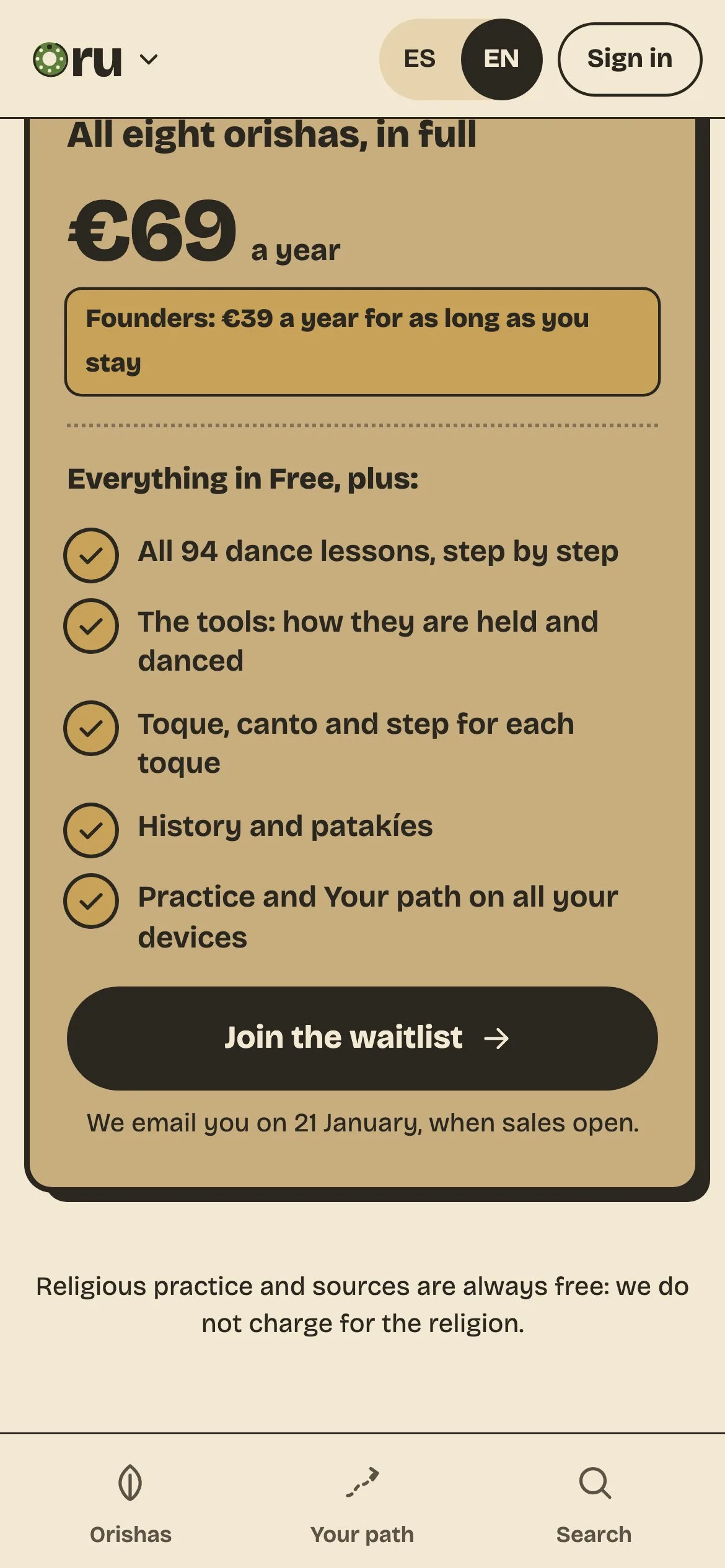
Oru Pro: €69 a year, founders €39 a year for as long as they stay, what Pro adds and Join the waitlist
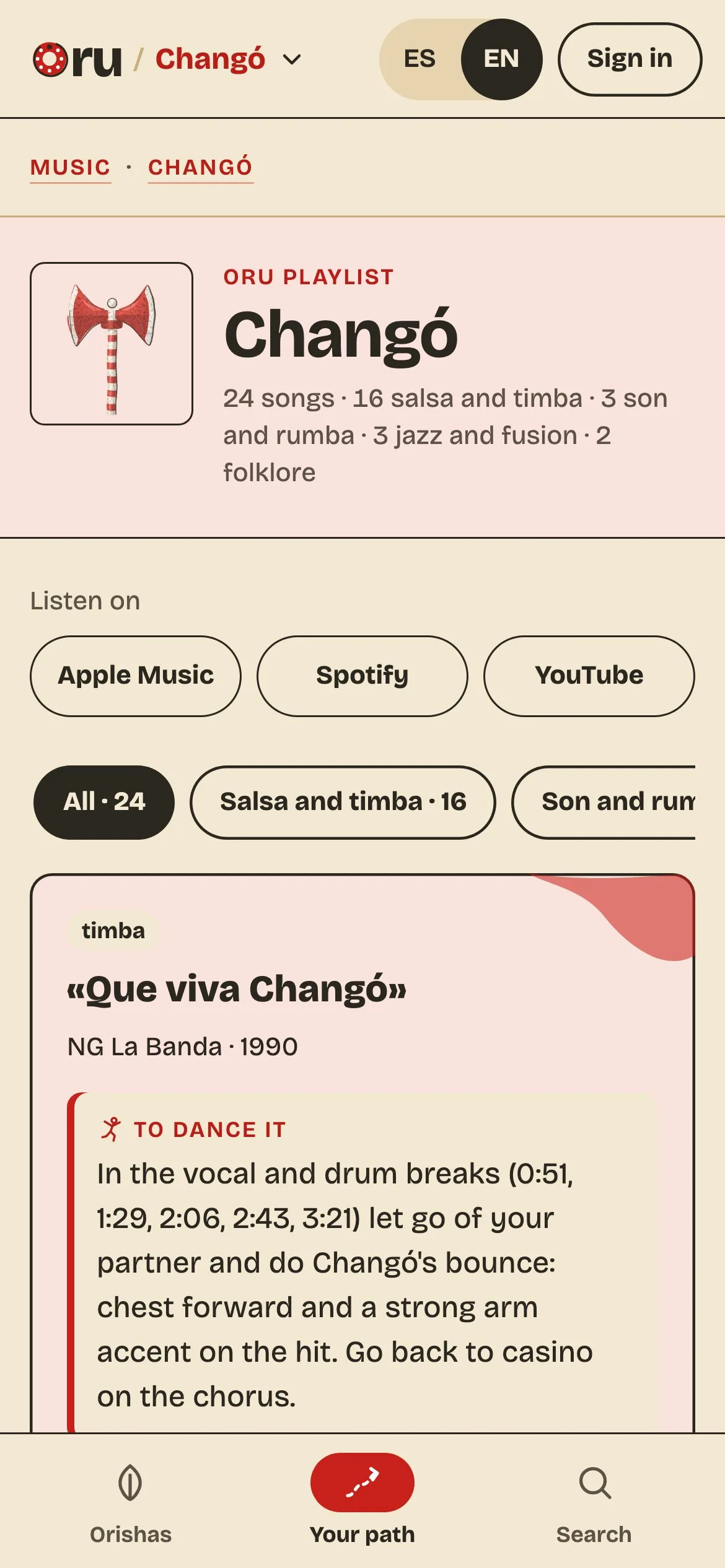
Changó’s playlist: 24 songs, links to Apple Music, Spotify and YouTube, and a tip for dancing each song
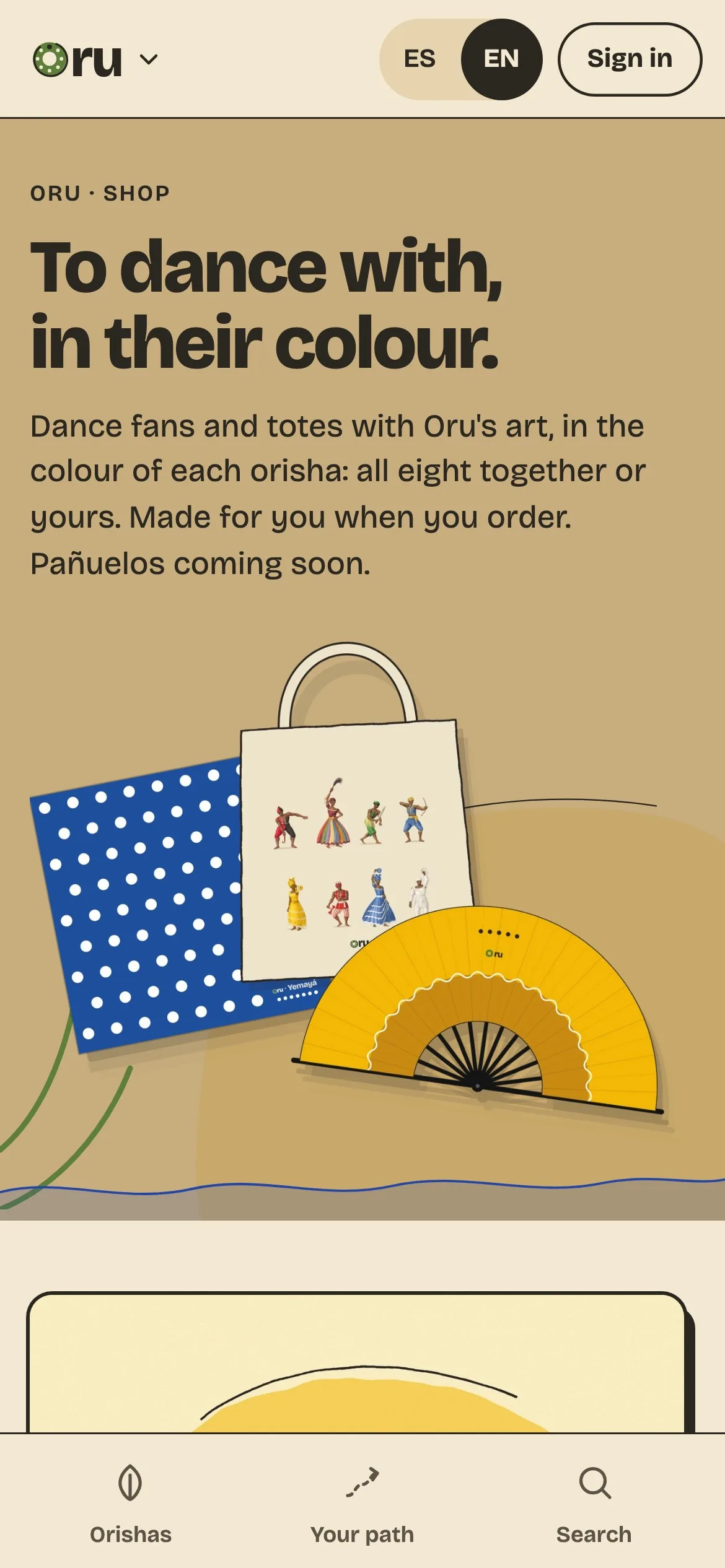
The shop: fans and totes with Oru’s art in each orisha’s colour
  • A yearly subscription. Stripe Checkout with Managed Payments; a webhook on a Cloudflare Worker turns on Pro in D1.
  • Founders. 20 seats at €39 a year for as long as they stay, through a coupon that runs out by itself.
  • Free where it matters. The religious practice and the sources are free for everyone.
  • Merch without stock. A paid order in Stripe becomes a print order with Gelato, with art from the same figures.

Impact

quality in every release

In beta with dancers and teachers; sales open in January 2027.
  • Speed. Lighthouse 96–98 on phones and 100 for accessibility, best practices and SEO.
  • Accessibility. axe: 0 WCAG 2.1 AA violations; 44 px touch targets; every animation stops with reduced motion.
  • An app without a store. An installable PWA; visited pages open offline.
  • Pace. About 470 commits and 120 numbered releases in the first 17 days.

What I'd do differently

  1. Settle the illustration style before drawing 600 figures.
  2. Check every pose against references before the first paid repaint, not after.

Need someone who can draw, build and ship?